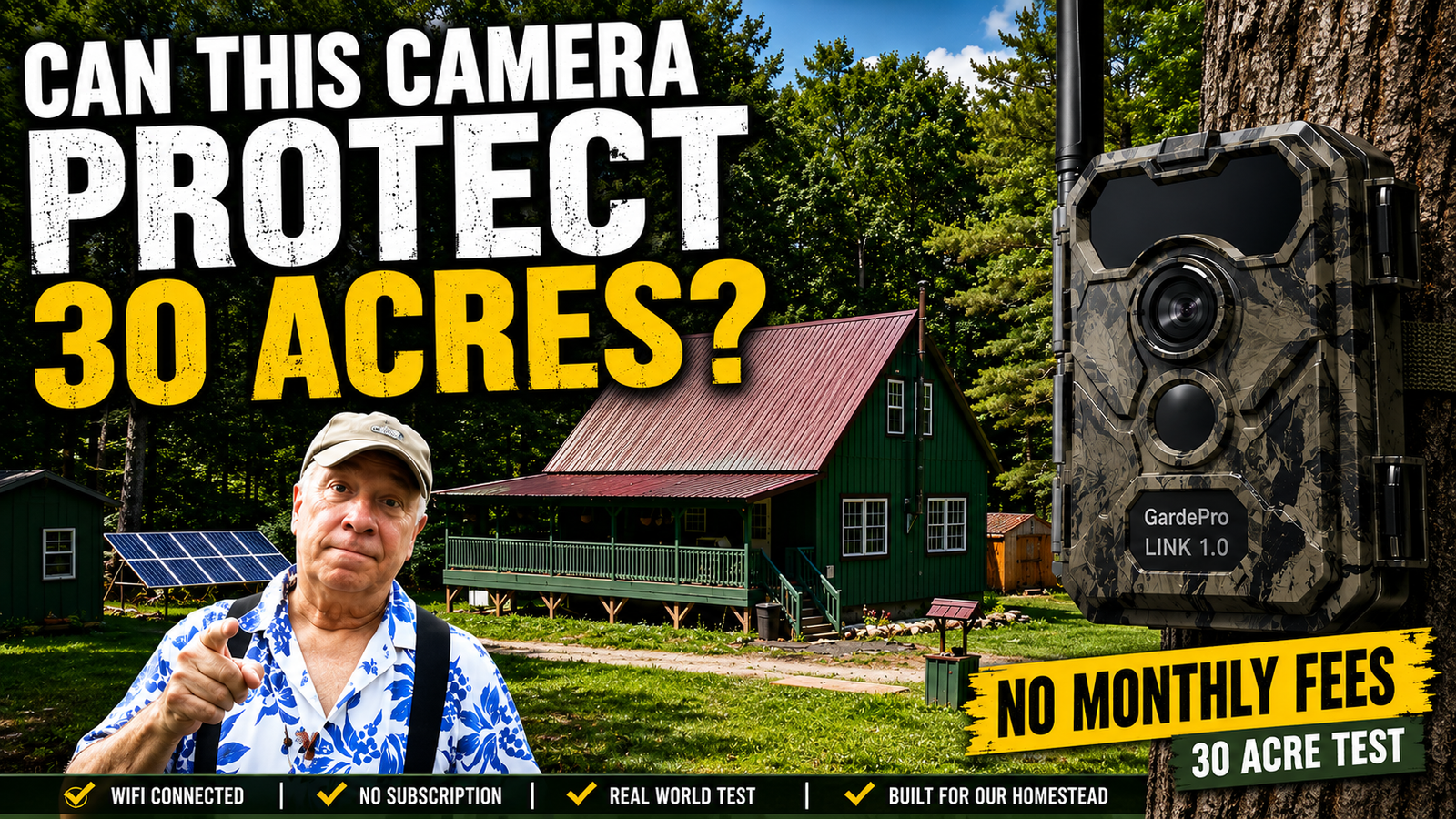
What We Wish We'd Known Before Buying 30 Acres
We thought we were buying a beautiful piece of land where we could build our retirement home. We had no idea how much work, money, equipment, and life-changing adventure came with those 30 acres.
The Story
We Didn't Exactly Have Time to Think This Through
There are probably better ways to make a major retirement decision than the way we did it.
We just didn't have the luxury of time.
For six or seven years, we'd been living in the mountains of North Carolina, turning our little house into the home we wanted. A lot of that work was done by us. Val designed her kitchen and bathrooms. We remodeled, built decks, worked with wood, learned how to use tools and equipment we'd later depend on, and generally turned the place into something we were extremely proud of.
It had become Val's dream house.
Then someone offered us approximately three times what we'd originally paid for it.
And that's why we sold it.
The money from that sale was our retirement stake. Our plan was simple enough: buy some land, build a home, and use what we'd learned during those years of remodeling to help us do it.
There was only one little problem.
The buyers needed to be out of their rental within a month.
So when we agreed to sell the house, we also agreed to close in about 30 days.
Suddenly, we had sold our home...
and didn't have another home to move into.
Three Days to Find Our New Life
Once we'd decided that we wanted to move north to be closer to Val's family, we started searching for land online.
We found five properties that looked promising. They were all around $25,000, which was roughly what we wanted to spend.
We had three days.
So we loaded up and drove approximately twelve hours to Upstate New York.
One day to get there.
One day to look around.
One day with the realtor to look at the properties.
No pressure.
Well...
A little pressure.
The first five properties quickly demonstrated something we hadn't really considered from behind a computer screen.
Land can look pretty good in photographs.
It can look considerably less attractive when you're standing in a swamp.
Some of the properties were wet or marshy. Others had no practical way to get into the interior without doing extensive and expensive work. And some wouldn't have allowed us to begin building for quite a while because we'd first have to spend money simply making the property accessible.
Our $25,000 budget was beginning to look less realistic.
Then our realtor mentioned another property.
It wasn't even one of the properties we'd originally planned to see.
It wasn't listed by him, but he knew the property and offered to take us there.
So we went.
And that's when everything changed.
The Property We Almost Didn't See
It was $70,000.
We had been looking at $25,000 properties.
So this one was, technically speaking, three times our budget.
But there was something different about it.
There was already a quarter-mile driveway running into the property.
There were several cleared fields.
And there was something we hadn't expected to find:
an ICF block foundation approximately the size of the house we wanted to build.
There was also a septic system.
Those things mattered.
A lot.
The foundation alone represented a substantial amount of work and expense we would otherwise have had to take on ourselves. The driveway and septic system represented more money and labor we hadn't included in our original calculations.
Suddenly, that extra $50,000 didn't look quite as insane as it had five minutes earlier.
And then there was the land itself.
It was gorgeous.
Compared with what we'd just spent the previous day looking at, it wasn't even close.
It was mostly wooded, with open fields, trails and beautiful terrain.
It looked like the place we'd been searching for.
So we made an offer.
And hoped for the best.
There was considerably more that happened between that moment and the day we could finally say, "Well, the rest is history."
But eventually...
30 acres became home.
What We Didn't Know We Were Buying
Here's the funny thing about buying land.
You can calculate the purchase price.
You can calculate the cost of building a house.
You can estimate the driveway.
You can estimate the septic system.
You can make a pretty good guess about the taxes.
What is much harder to calculate is everything that happens after you own the land.
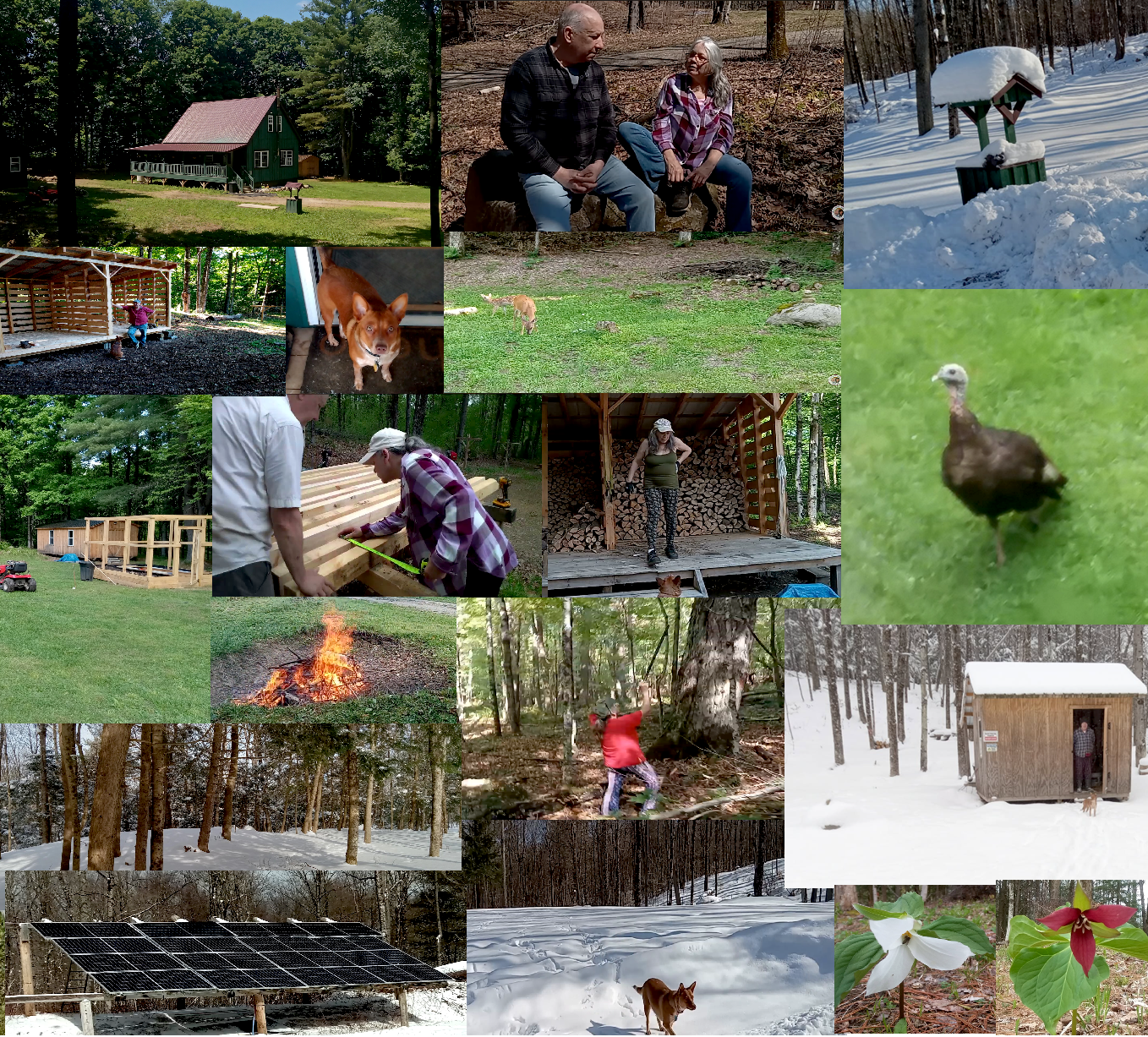
Our property is about 30 acres.
Approximately 25 of those acres are heavily wooded.
The other five acres are mostly open ground.
And one of the biggest questions I wish I'd asked before we bought it was:
How will I EVER manage 30 acres of heavily wooded property by myself?
Because 30 acres sounds wonderful when you're standing on it looking at the trees.
It sounds considerably different when you're standing there looking at everything that needs to be done.
Everything Costs Money
The first thing that comes to mind is a small tractor.
We may never get to the point where we can afford one.
But if we'd really thought about what managing 30 acres would require before buying the property, we might have approached the whole decision differently.
A tractor and the implements needed to actually make it useful can easily run $15,000 to $25,000 or more.
That's a substantial chunk of money when you're living on a retirement budget.
In our case, it would have represented more than a third of what we originally intended to spend on the land.
And the tractor isn't the only thing.
An ATV or side-by-side would make getting around the property dramatically easier.
Chainsaws aren't cheap.
Riding mowers aren't cheap.
Gasoline isn't cheap.
Maintenance isn't cheap.
And all of those things become part of the cost of owning the property.
You can spend all day thinking about what needs to be done.
But if you don't have the right equipment to do it...
you can be stopped dead in your tracks.
Nobody Told Me How Fast Everything Grows
I'm from the South.
I've watched kudzu consume things.
I know what fast-growing vegetation looks like.
But I wasn't prepared for Upstate New York.
The growing season may be shorter here, but when everything starts growing...
everything starts growing.
Trees.
Brush.
Vines.
Weeds.
Shrubs.
It seems like everything is trying to reclaim whatever space you've managed to clear.
And that creates another layer of work.
We have roughly five acres of open ground that needs to be mowed and weed-whacked.
Val does a lot of that mowing.
And it can take a substantial amount of time.
You can also go through five to ten gallons of premium gasoline surprisingly quickly when you're maintaining several acres of open ground.
Nobody told me I'd spend so much of my retirement thinking about grass.
Or that Val would spend so much of hers cutting it.
The Part About Getting Older
This is probably the part I wish we'd thought about most carefully.
When you're younger, you look at 30 acres and see possibilities.
You see trails.
Trees.
Fields.
A garden.
A workshop.
A place to build things.
A place to explore.
When you're older, you eventually start asking a different question:
Can my body actually keep up with all of this?
We can still do a lot.
And we're doing a lot.
But the difference between being capable of doing something and being able to do it sustainably becomes pretty important.
There are things we'd love to do on the property that we simply don't get around to doing because they require equipment, time, energy—or all three.
I'd love to spend more time exploring our own land.
I'd love to hike more of it.
I'd love to see more of the property simply because it is beautiful.
But most of our time is spent managing the areas where we actually live and work.
That's an important distinction.
Owning 30 acres doesn't mean you get to enjoy all 30 acres equally.
Then Something Unexpected Happened
We discovered our Amish neighbors.
We had already been here six or seven months before we really found our way into the Amish community around us.
And once we did...
life changed.
We've been invited into their community.
We've attended an Amish funeral.
We've had several frolics on our property.
We've received help, advice and support.
And we've learned more than I could possibly put into one article about self-reliance and living simply.
If you want the ultimate practical guide to living with less dependence on the modern world, it's hard to imagine finding better teachers than people who have been doing it for generations.
We're always going to be "English."
But they consider us friends.
And we're incredibly grateful for that.
It wasn't something we could have put on a spreadsheet when we were comparing properties.
It wasn't an amenity listed by the realtor.
It certainly wasn't included in the purchase price.
But it has become one of the most valuable things we gained from moving here.
And Then There's Val
There's another part of this story that would be easy to overlook.
There were two of us making this decision.
And we weren't necessarily starting from the same place emotionally.
Val wanted to be closer to her family.
She hadn't seen them in years.
That was a powerful reason for her to make this enormous change.
But she had also just spent six or seven years helping turn our North Carolina home into her dream house.
She designed the kitchen.
She designed the bathrooms.
We spent roughly $60,000 remodeling, adding decks and improving the property.
She loved that house.
And leaving it wasn't easy.
In fact, one of the things that makes me smile about the whole story is that the kitchen Val designed turned out to be a major reason the people who eventually bought the house wanted it.
So she didn't leave because she was tired of that house.
She left because being near the family she'd been missing was worth starting over.
That's a pretty important distinction.
We weren't two people running away from a life we didn't want.
We were two people willing to give up a life we did love to build something different.
Together.
The Southern Boy Who Fell in Love With Winter
There's another thing I never would have predicted.
I'm from the South.
I had never imagined myself living in Upstate New York.
Not in a million years.
And yet here we are.
I've discovered that I actually love the winters.
I love the snow.
I love the seasons.
I love waking up and seeing the landscape completely transformed.
I love the people we've met.
A lot of the folks around here are some of the friendliest people you'd ever want to know.
Val still talks about getting back to the warm, sunny South sometimes.
I understand that.
But me?
I wouldn't move back.
Somewhere along the way, this place became home.
And Then We Realized What We'd Really Bought
We thought we were buying land.
Then we thought we were building a house.
Then we realized we were building a life.
Those are three very different things.
We have to check our solar system because we made the decision to become our own power company.
We have to prepare for winter long before winter arrives.
We cut, haul and stack firewood.
We clean the chimney.
We maintain equipment.
We mow.
We clear.
We repair.
We build.
We plan.
And we do things differently than we did before.
But here's the thing I didn't expect.
None of that feels like failure.
It's just our new normal.
We don't have to worry about a power line going down and leaving us without electricity.
We don't have to worry about whether we can afford the next electric bill.
We don't have to depend on somebody else to keep the lights on.
We've traded some worries for others.
But the worries we have now are largely things we can see, understand and manage.
That's a pretty good trade.
Would We Do It Again?
Knowing everything we know now?
I'd have a much longer list of questions before signing the papers.
I'd calculate the equipment costs.
I'd think harder about how much land we could realistically maintain.
I'd consider transportation around the property.
I'd think about our age and what happens when we're ten years older.
I'd think about the cost of maintaining 30 acres year after year—not just buying it.
And I'd probably scare myself half to death with spreadsheets.
But would I buy this property again?
Yes.
Because we didn't just buy 30 acres.
We bought the opportunity to build something with our own hands.
We bought a place where Val could be near the family she'd missed.
We found a community we never knew existed.
We learned things we couldn't have learned anywhere else.
And we discovered that even at our age, starting over doesn't necessarily mean starting from nothing.
We're carrying a lifetime of experience with us.
That matters.
We're not 20 years old anymore.
We don't have the strength, time or endless energy we once had.
But we've got something a 20-year-old doesn't have:
a lifetime of learning what matters.
And perhaps that's the biggest lesson of all.
If You're Thinking About Buying Your Own Piece of Land...
Don't let our story convince you that 30 acres is a good idea.
It might be.
It might also be completely wrong for you.
Before you fall in love with the view, ask yourself:
How will I get around it?
How will I maintain it?
What equipment will I need?
What will that equipment cost?
How much of the property will I realistically use?
What happens when I'm older?
What infrastructure is already there?
And how much will it cost to make the property usable?
Because the beautiful land in the photograph is only the beginning.
We learned that the hard way.
But we're glad we did.
Because somewhere between the trees, the snow, the firewood, the machinery, the mud, the mistakes, the Amish neighbors and all the work...
we found the life we didn't know we were looking for.
WATCH THE FULL PLAYLIST →